What actually needs to happen to decouple the economy from
having
ever faster swelling impacts on the earth is to switch
to a DIFFERENT KIND of wealth production, rather new ways to deliver consumer
products. We need a switch from quantitative to qualitative growth.
That's
where everyone agrees there is a LOT of room to grow.
The
need for a *different kind* of wealth is evident in the math too, and as
further discussed in my article:
Decoupling Puzzle - a partial answer
and elsewhere.
A directly supportive view is also found in
Tom Walker, 2013
The Odd Coupling: Asking the Wrong Questions about “Decoupling”
Environmental Impacts from Economic Growth
The historical record clearly displays the "coupling" between "what
people like to buy" (GDP) and the Energy uses for delivering products
and services. The ratio of the energy to GDP growth rate is a
constant 60% even with ever improving productivity (shown as economic
efficiency).
The clear evidence is that the economy doesn't work the way the people
hoping it will soon do the opposite would like.
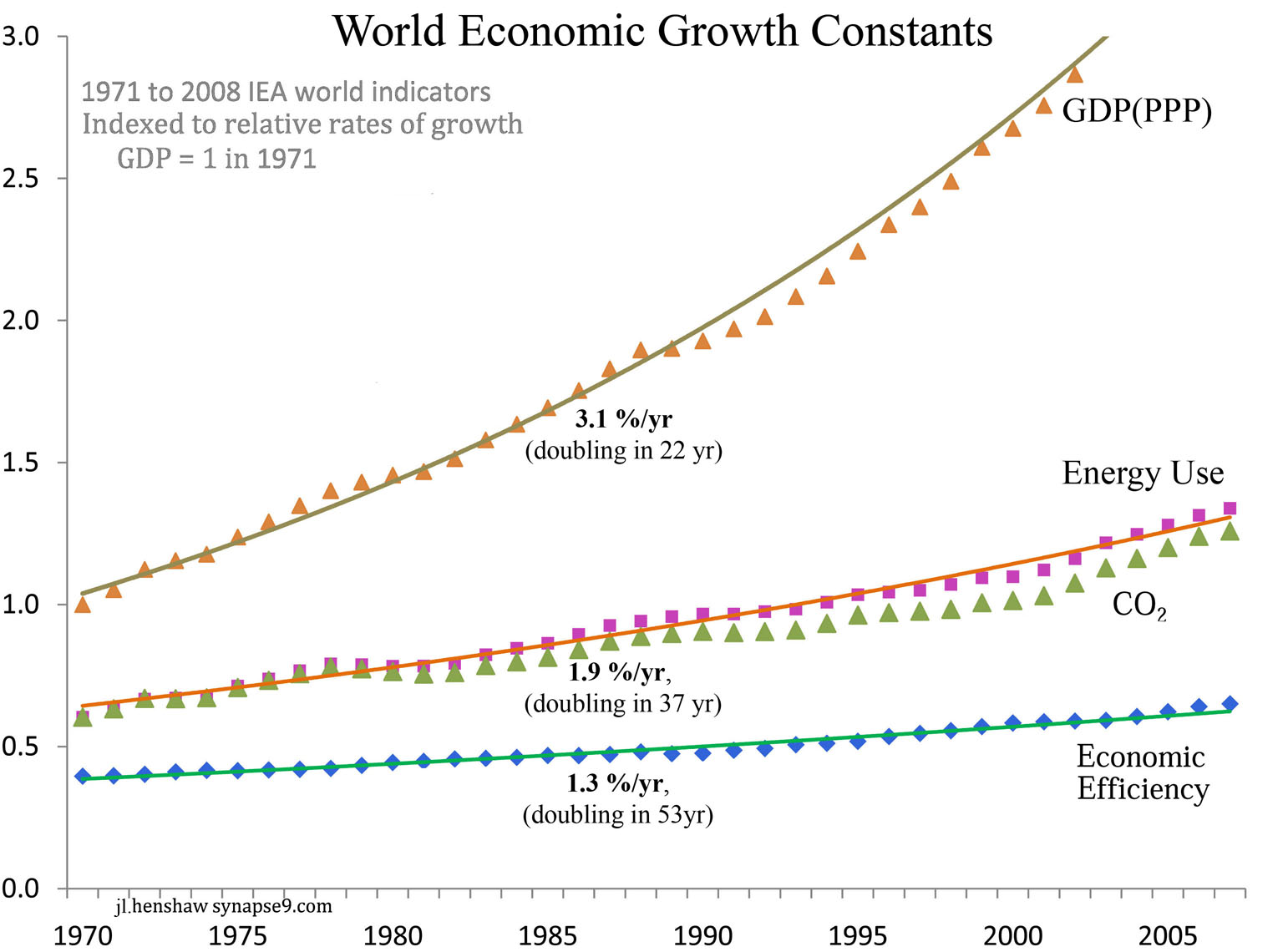
Fig 1 - The historical coupling of GDP growth, in constant
relation to Energy, CO2 and Energy Efficiency Growth
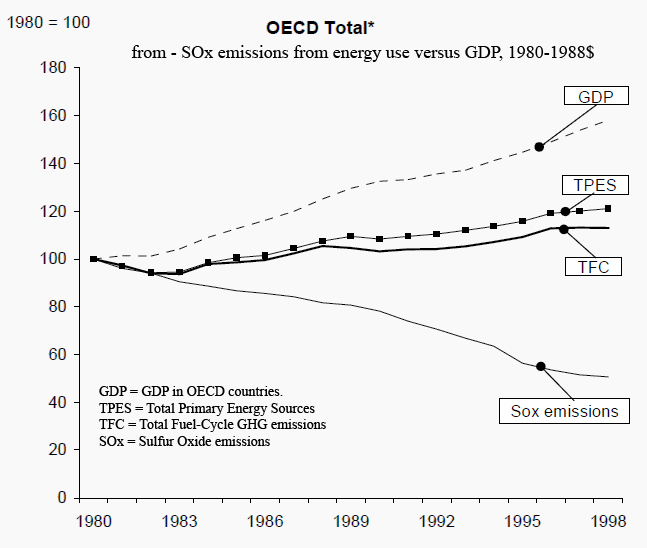
1. "As may be seen from the figure, SOx emissions
have exhibited absolute decoupling from GDP growth in OECD countries.
[...a real reduction is pollution is shown as
energy use in developed countries increased, but that's not a reduction
in energy use, nor in the environmental pressures that result from
what we use energy for. So the figure is misleading in
suggesting a global reduction in the impacts of energy use, leaving out
all but one.]
2. "This has been due in the past to an overall
reduction in energy intensity with total final consumption of energy
growing much slower than GDP..[and].. policies which have caused the
energy sector to sharply reduce emissions per unit of energy produced."
[... more confusion between the global impact and
the single pollutant success story comes from suggesting that "the
reduction in energy intensity" has anything to do with it, as that has
been accompanied by continued accelerating increase in energy use, just
a little slower than the rate of growth in GDP. That, of
course, is the constant rate of "coupling" of GDP and energy use, and
not a "change" to energy use growing slower, but a continuation of it
doing what it always did.]
Hidden
from view is why the authors might find the isolated example convincing.
There's an "grand illusion" in the very same data, that seems to say that
advanced OECD countries, in particular, can have fast growing GDP's without
added energy use at all, that growth can decouple from energy use totally,
as it appears for the US. If it were true there might be some
basis for the thrust of the report, that eliminating the entire
environmental impact of GDP growth could be the natural result of even more
growth. Still, it also implies that the causes of our dangerous
abuse of the earth can be the cure too, should give one pause, and the
report indicates none that I can see.
The real source of the
illusion is the use of local statistics for measuring global effects.
GDP growth in
advanced economies, having used up their own resources first, is ever more
reliant on outsourcing energy, resources and other environmental services
from other countries. The world economy works by the developed
countries "providing the know-how" while others "provide the stuff" you
might say.
So.. what really causes
the illusion is the accounting method used. The
world's resource accounting method only records material flows.
It seems "logical" if you want to know material flows, but economies are
money machines more than material ones. If materials don't cross
national boundaries, national material accounts won't record the materials
their citizens paid for the use of... Material accounts of
an economy actually can't show what end user or end product is responsible
for pays for and generating the resource demands of the economy.
Creating demand is the whole purpose of an economy, it's just not as easy to
count.
With effort you could link
the material uses of the economy to who creates the demand for them,
wherever those use occur. Then national GDP figures would directly
correspond to resource needs for delivering what it consumes in end
products, including what both consumers and businesses purchase from other
countries, as done in so called
"Scope 4" accounting.
The recent major,UNEP report (2011)
Decoupling natural resource use and environmental impacts from economic
growth, (A Report of the Working Group on Decoupling to the International
Resource Panel), goes the rest of the way in extending the illusion of
"decoupling" based on misleading local data projected globally. It
becomes an explicit claim, that continued growth can reduce environmental
impacts in real terms continually.

Fig 3 - Decoupling as the faster rate of growth for GDP
than Resource uses
for the resulting avoided environmental impacts causing continued growing
accumulative reductions.
Here resource use is shown increasing ever faster, along
with still faster growth of GDP, and ever still faster growth in human
wellbeing. The environmental result shown, though, is the
"implied impacts avoided" from GDP growing faster than resource use,
portrayed as an ever faster absolute decline in resource use
effects.
There may well be others in the policy community that take a
more cautions approach, but this is fairly typical of the "official" policy
presumption that now holds sway in large multi-national negotiations, such
as in the UN's Post2015 development goal discussions I have closely observed
on this question. It's the tacit assumption being relied upon for
that whole array of policy plans, that continually improving
resource productivity reduces resource use.
It only overlooks the clear evidence, when looking at the
whole picture as in Fig 1. What's been most
effective for making money, consistently
throughout history, has been delivering more and better resource products by
promoting increasing productivity. It's a very serious
thing, but you have to joke about serious things to deal with them
effectively sometimes. The answer the world community drifted
away from is right there in the word we use, "product-ivity".
Look it up! ;-)
An economy that achieves "decoupling" by shifting from
Quantitative Growth (using growing amounts of
energy to build and consume growing amounts of things) to
Qualitative Growth, (making what they built
work better and better) would follow a more natural Quantitative
growth decoupling, still allowing qualitative growth without energy
use, more like the
study model example,

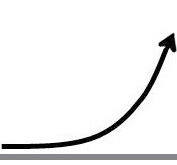 Curve B