¸¸¸.·´ ¯ `·.¸¸¸ A Bump on a Curve Notepad,
Users Guide
Methods for closely observing the Transformative Chapters in the great narrative of life

|
exploding increase |
exploding decrease |
tapering increase |
tapering decrease |
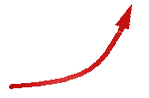
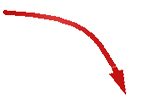
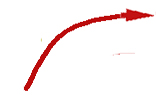
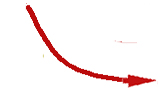
When
you see one of these dynamic shapes of changing scale over time, (nature's
main shapes of irreversible change), you know the changing scale
is being caused by some system in the process of changing organization, and that
organized process of changing organization... is where to look
for more and more of the whole story.
e-mail Jessie Henshaw = sy at
synapse9.com - (I'd appreciate good questions. Drop me a line.) see why?¸¸¸.·´ ¯ `·.¸¸¸
3/3/07
3/4/07 3/8/09 3/28/07 5/28/07, 3/5, 3/29, 5/28, 1/8/08, 1/20/08, 2/10/08,
9/18/08, 3/18/09
Beginning Research Projects: 1) First Attempt 2) At the Office
Advanced Design Projects: 1) Development Impacts 2) Creative Bureaucracy 3) Reducing Poverty
There's
a somewhat popular design idea called 'biomimicry'.
This ‘notepad' offers a way to understand how natural systems develop and
take care of themselves in nature, using a learning method that mimics nature's
own way of developing systems of relationships. It's a
method of using a simple general model and let it grow in design and detail
from your observations of the eventful systems that are part of your
experience. It produces a kind of behavioral "map"
used like a navigator would, for referring back to the eventful systems that
were the "territory" your information to build the map came
from. It's a learning and observation tool. It's
mainly for teaching one's thoughts to mimic the evolutionary changes of nature,
to understand world of complex systems in which we are immersed.
What's there to look for? - useful first principles of system change
Make believe that you are in a vehicle, born there, and didn’t realize it needed to be steered or could be, and you find yourself part of the first generation of humans to realize that. With there being no established method for doing it, no one else can tell you how. What would you do?
The first thing is to familiarize yourself with all the parts you had just taken for granted before, like all the amazingly common complex things that take care of themselves and never needed tending before. We need to look at them with fresh eyes, as if we were newborn and dropped unexpectedly into a new environment. As you survey the parts of nature that naturally take care of themselves, the large and small climates, biological cells and conversation networks, the organisms and species, the natural and human economies, you find some curious common features.
One is that all kinds of self-managing systems, animate and inanimate, use energy somewhat like economies do, collecting, transforming and distributing resources and energy using a complex multi-stage process. They’re a family of individual organizations.
You also find that things that take care of themselves have individual life cycles, and that those life cycles all begin and end with developmental processes, for creating and completing themselves. They don’t always determine their own limits or their own outcomes, but they always determine their own paths of development within their limits and so develop unique features. Developmental processes work by building on themselves, accumulative change in which all parts of the developing process are changing at once. It operates without central or external control, like fire, climate, technology or politics.
A different kind of science is needed to understand them, because one thing they generally don’t have is any consistent categories for comparing the things that are unique about them. We just can’t compare our economy’s experience today to that of any other than ever before.
The most useful “first principles” of system change start with recognizing how periods of “self-organizing development” generally start. It is by combining some kind of seed pattern and seed source of energy. That seed pattern becomes the nascent system’s “killer app”, how it uses it’s “fossil fuel” seed of energy to start multiplying. The combination sets off the “runaway process” of multiplying “auto-catalytic” change, leading to a point where the change process changes.
That event at the end of growth may be dramatic as when a mammal ends its explosive growth in the womb and is born. For convection systems, like for the column of warm air in a cumulus cloud, the end of its acceleration is at the top of the column when it becomes turbulent and billows out at the top of the cloud. There are lots of other individually different ways for runaway development processes to end in transforming the system that started with them. That one-two punch, growth and change, produces a “punctuated equilibrium” of change in form brought about by a regular developmental process.
The strangest of all things about growth processes may be that they work at all. They grow by inventing increasingly complex designs without a plan, without experimentation or trial and error. Isn’t that an amazing trick?! Somehow uncontrolled processes can achieve things that controlled ones never could. They don’t have any way of having foresight, but in many ways act as if they did. Like the explosions of creativity that come with emerging technologies, growth systems are magnets for new things to fit, exposing threads of opportunity in their environments that are often previously unobservable and inconceivable.
From a deterministic point of view, contagions of creative design like that can only be predicted by making up rules in hindsight and are generally too complex to individually describe. The real secret to how they work is by linking complementary opposites, like readers and books, wheels and axels, meat and fire, organisms and niche’s, investment and profit, with the resulting contagion propagating to the exhaustion of its environment’s potential for synergy from those complementary links.
People never really needed to explain how growth systems worked before, only to have some notion whether they would or not. When they “worked” they often worked like crazy, sometimes too crazy, with little way to tell the difference. No science ever saw a way to understand them as emergent creative processes with surprising ends before, either. Now we need to and find the “first principles” that have eluded us so far. The growth system for our civilization has already progressed well into its change of form at the end of its growth and is visibly causing massive disruption in critical things that once took care of themselves.
So, our growth system, anyway, is clearly NOT taking care of ITSELF. As a culture we don’t appear to know the first thing about it though. What is happening to us is that we are being caught off guard by this change of form of our growth system beginning without our noticing. Our whole society, its languages and laws, rules and institutions, expectations and value systems, developed and solidified a couple centuries ago with the modern age. All that developed around a culture and model of continual runaway growth. That worked fairly well for most of that time, as if it could continue forever.
In the early period of economic growth each path of opportunity exposed even greater ones, up until about 1950. At that time the pattern of ever multiplying opportunity started to smoothly switch to one of multiplying difficulties. That we still haven’t noticed is the greatest and most dangerous problem facing us. As the natural response to our increasing investment in growth reversed, we kept applying the strategy that gave us ever greater freedom before. It has produced mounting costs, complications and conflicts instead.
The longer we wait now, the more unaffordable it will become to respond to them later. As we wake up to this it may indeed seem like a newborn dropped into an alien environment. It is indeed a situation that is very different from what our culture taught us to expect.
So, as you explore and organize your maps of what to look for in this new territory of ours, it’s maintaining the open questions you find and keeping yourself from really closing them, that will save you from the most dangerous pitfall of common reasoning. It’s better to have questions become richer questions, giving you a choice today and a deeper awareness of relationships for tomorrow. Without open questions it’s easy to let the subject turn to one’s own internal self-constructed world view, disconnected from what other people are referring to, leaving us to mostly just talk to ourselves.
What can connect us in the end is only the individual systems of the external world that constitute our common physical reality and of which we all naturally remain largely ignorant.
a) Natural Systems - Where Are They?
Well, in case the page title isn't a clue, natural systems are *in* every 'bump on a curve', in the process of what's happening. They're in all the many kinds of 'phenomena' that come and go development, like the lives of people, or storms or cultural or economic changes. The work is locating their boundaries and explore them as their own little universe of self-related processes, as a new kind of window on the eventfulness of change around you. The main distinction is just becoming better able to tell what changes are beginning and what are ending, learning to notice what's going on around you, noticing little details that you could use to change the whole process of events. It's not just discovering fascinating new layers of magic in nature, but also learning the moves and becoming a better dance partner with the many other living partners you share your environment with. Part of what you find is that local creative processes are part of every cause. The "deterministic" rules of cause and effect do help when working with, things that seem highly predictable. They are the other kind of "notepad" for what's happening. The two kinds can work together. You find that 'necessity' often isn't enough, because necessity always takes possibility too.
3/18/09 Well, I've been wondering for a long time why the flows of change are so hard for people to see and do think there's some kind of "fixed world illusion" to contend with. There's a list of reasons why we don't update our information regularly and so miss the shapes of the animated flows of change because of that. It's a little speculative, but another detail caught my attention recently, that even when repeated changes in "normal" are quite dramatic, people often only have to "sleep on it" to readjust and see even very short-lived situations as if they were permanent and a brand new permanent "normal".
Nearly every pundit and media source from 2007 to the present has radically changed their stories about the economic collapse nearly every week... for example, always seeming very comfortable with the "ever present" finality of their quickly changing stories. It's like there's a "reset button" that they all keep using, that hides the facts of accelerating change.
I've been wondering about what that has to do with sleep. Could it be that the way the mind digests information collected during a waking day is similar to how your computer loads new software updates when you shut it down to reboot? Could both need to operate with a fixed system that is regularly updated when turned off? Sleep might clear the memory and refresh the world image. Perhaps relieving the conscious mind of continual complex rethinking accounts for our not noticing how our own world is changing. That would be a very efficient design concept, having brains that refresh their model of life every night and give you an fresh but changeless new "snapshot" copy every day, an ever-changing "blank page". If you live in a stable world, it's only a minor defect that the strategy would arrange our awareness as always of a fixed world, moving you through life one fixed frame at a time, that you would not need to consciously account for. That sort of defines the "fixed world illusion", as well as the common experience of life in a changing world as an "ever present". So, as I said, it's speculative, but something like that does seem to make it hard to see the dramatic flows of complex changes occurring in our life circumstances, which are quite clearly visible in the data but not perception. Change has been measurably multiplying in speed and complexity, quite dramatically for decades, and not appearing to change our daily life experience of time at all.
Somehow our minds seem to erase the increments of change, and their accumulating effects, so we miss how changes of scale in environmental relationships precipitate changes in kind. If that integration is what is normally done for us while we are unconscious in sleep, and sleep is then when we are conscious of change and its reprogramming of the world, what is needed to become more aware is something like a way of "sleeping on the evidence" while awake, watching change without fixing it as a permanent state, a kind of "walking meditation" to let the questions develop without losing them in answers.
 The live and
kicking system individuals that people can learn to 'point'
to as sharing our common environment are the circles of relationships that
display themselves by acting together. They're the actively
changing networks of relationships that have always been the main subject of
human interest, but we have needed to make up our own separate stories
about. Our stories of change tend to be accurate
descriptions, but elements of the stories have not worked well for
understanding cause and effect.
Systems have distributed processes and individual
learning parts, so wherever you look most of the action is
somewhere else, every cause leads to multiple effects, and the effects change
each time. Looking for linear sequences of causes mostly just leads in a
wandering tangle of circles, until you notice that the circles, as wholes, have
progressive increments of change. Then, looking for the circle in
which the increments develop may begin to offer something much more concrete
and useful for watching progressions of change in and environmental relationships
for. Remember, it's not your own meaning for the parts of a system
that it is aware of, and that the things of nature themselves operate as they
do with none of our meanings at all. It's their languages you're looking
for a hint about, a chance to step into another organism's way of relating to
its universe. It's hard to separate the things we see from the meanings
we give them. You can keep track of the difference a little by
noting that the physical things themselves generally have more discoverable
features than we can make meanings for.
The live and
kicking system individuals that people can learn to 'point'
to as sharing our common environment are the circles of relationships that
display themselves by acting together. They're the actively
changing networks of relationships that have always been the main subject of
human interest, but we have needed to make up our own separate stories
about. Our stories of change tend to be accurate
descriptions, but elements of the stories have not worked well for
understanding cause and effect.
Systems have distributed processes and individual
learning parts, so wherever you look most of the action is
somewhere else, every cause leads to multiple effects, and the effects change
each time. Looking for linear sequences of causes mostly just leads in a
wandering tangle of circles, until you notice that the circles, as wholes, have
progressive increments of change. Then, looking for the circle in
which the increments develop may begin to offer something much more concrete
and useful for watching progressions of change in and environmental relationships
for. Remember, it's not your own meaning for the parts of a system
that it is aware of, and that the things of nature themselves operate as they
do with none of our meanings at all. It's their languages you're looking
for a hint about, a chance to step into another organism's way of relating to
its universe. It's hard to separate the things we see from the meanings
we give them. You can keep track of the difference a little by
noting that the physical things themselves generally have more discoverable
features than we can make meanings for.
 When two people learn to
'point' to independent natural systems, they no longer need to agree on how
they're defined because physical things define themselves, so people have a
chance of referring to and talking about the exact same thing! (well hopefully) It may not simplify communication until you
develop a little skill, but at least attempting to point to different features
of the same physical things represents a major advance in dealing
with the real world. Much of the time, in conversation people
are all talking about their own self-made world of cultural values, and often
unaware that that is what others are doing as well. Trying to refer
to changing networks of relationships as real things, that share the
common wilderness of the physical world with us, has the benefit of
letting us then explore the same common subject with each other's views in
mind. Otherwise, the tendency is for everyone to pass judgment
without quite understanding what each other person is referring to!
When two people learn to
'point' to independent natural systems, they no longer need to agree on how
they're defined because physical things define themselves, so people have a
chance of referring to and talking about the exact same thing! (well hopefully) It may not simplify communication until you
develop a little skill, but at least attempting to point to different features
of the same physical things represents a major advance in dealing
with the real world. Much of the time, in conversation people
are all talking about their own self-made world of cultural values, and often
unaware that that is what others are doing as well. Trying to refer
to changing networks of relationships as real things, that share the
common wilderness of the physical world with us, has the benefit of
letting us then explore the same common subject with each other's views in
mind. Otherwise, the tendency is for everyone to pass judgment
without quite understanding what each other person is referring to!
The main distinction is between variation in degree that is 'elastic' and 'regular' 'fluctuation', and the kind that represents things that permanently come and go, 'independent events'. We're not talking about the information that something has happened, but the natural physical process. Information does not have these shapes, only natural processes. 'Regular fluctuations’ directly reflect their own past and continually repeat by rippling out over and over in their futures and may have no clear boundary in time or space.


Independent events are localized and their processes come and go. Their changes in degree represent a sequence of permanent developmental changes. They're actually two aspects of all natural systems, like different views of the same thing. If you see one gain a lot of insight by finding the perspective that lets you see its 'other half'. Everything that happens has both aspects of change, repeating cycles and permanent developments.
This story is about looking at both together as part of a continual process of change, understanding how cycles come and go, and how things that come and go are built from cycles. All living things, and lots more, make their first appearance with compound growth from almost nothing, then mature, have a bit of sustained freedom for a while and then decline and vanish. Animals display the continual swings that take them along the 'wheel of change' in having a continual heartbeat and constant breathing, for example. In following these 'wheels of change' you can discover how the wheel itself permanently comes and goes, that rhythms are found within whole events. To understand either one needs to understand both. Though we sort of know the trick to it, it stills fools us all the time. These connections are mostly invisible to us for a special reason. They're inside, inside the things that we observe from the outside. That gives much of nature an organizational appearance like that of Swiss cheese, i.e. full of holes, with all the real happening somehow going on where we see nothing at all. This is about digging in holes and finding lots and lots of cool stuff.
One of the little things that helps shed light on what's inside nature's 'dark holes' is finding that cycles are not circles but have accumulative effects that change the cycle itself on each turn. It's a matter of nature doing "almost the same thing", over and over again, but we tend to fudge the small accumulating differences as making a circle. It's a large error. The little proportional changes we commonly overlook, if they accumulate, do ‘exponentially’ change relationships within the cycle and with its world. When we let our minds take the little shortcut of considering cycles as "exactly the same thing" it's taking a kind of wishful thinking shortcut. We'd like to imagine the designs of nature as 'fixed’, but that also hides a great deal of nature’s true design.
d) A Calculus for the very young in heart
I mean 'young in heart' here as being fascinated by and delighted with just the accelerations of the world around you, in the way kids in their peak learning years from 6 to 12 are delighted with discovering physical accelerations, in particular. Learning to ride a bike or swing high on a swing is HUGE entertainment for them. It also marks a period when the anticipation of something about to go Zoom! is perhaps even more fun than the event itself. When little hints for something about to happen are skillfully used by a teacher, or a puppeteer, or even a friend teasing you playfully with their confidences, affections or even worms. Anticipation alone can cause explosions of anxiety and delight. With ghost stories the thrilling anticipation of something about to happen is a manipulation of real fear, permitted as an experiment in a secure setting. Physiologically it's all about learning the tiny cues available to be read in the shapes of change, the basic subject of calculus. When it's done right the foreshadowing of events is perceived in the tiny signals of approaching dramatic change, messages about the acceleration of accelerations of accelerations, 'gotcha'. If you tell the story, or hint at the prize in a lifeless manner, allowing the signals to be obvious, or disconnected, leaving out the strategic silences when the audience anticipation would grow, well, all that's produced is a big disappointment even if the ghost or tickle that finally appears is just the same.
Dramatic events ARE dramatic not only because they 'blow up' but more because you're aware of their 'sneaking up' first. In navigating the real world as adults, we use this kind of learning from childhood games for reading the score' all manner of grown-up games in very complex ways sometimes. This is about taking that same set of basic interests and skills and using them to help read a new level of organization in the ordinary events of the world around us. The normal course of natural system events initially follows a course of accelerating acceleration that starts very innocently, perhaps providing ample time to respond, but then smoothly develops to 'jumping' out at you as a big surprise, even if you were in on the secret all along. What you're reading during the anticipation period is the beginning story of all stories, that gentle quickening in the rhythm of small things that signals great change. What you're reading with your gut level feelings of anxiety and excitement are it's 'derivatives' the deep levels of explosion in smooth processes of progressive change. The thing that scientists have yet to quite recognize, and most people at least understand intuitively, is that patterns of acceleration in events tell you a great deal about what they are about and where they're headed. The idea here is to recognize these patterns more consciously, with experience to better understand the real difference between the signs of beginning and ending, of stability or instability, of whether things are cyclic, or happening near bye, sensed only from echoes, the trends indicate reversible and irreversible change. Those are important things to know!
But,... if it happens that you don't really feel anticipation on a gut level and aren't really interested in what details of events legitimate those feelings, well then, maybe you just won't find natural systems as easy to start learning that way. Maybe your way would be to start from the logic of how near-living things evidently have to work, and as you pattern recognition develops work backward to enlarging your intuitive and emotional experience of them. Wherever you start there are lots of avenues to explore. It inevitably gets personal, though, because by 'natural systems' we're also talking about, are more or less, whatever it is that gives that magic combination of continuity and animation to our lives.
One scientific detail needs to be mentioned. In order to consider the shapes of change you need a consistent way to 'value' or 'measure' their changes. If your own way of valuing things is moving around, the changes you see are not of the thing you're valuing. How to make consistent value judgments or measures is an art, so just take it for granted first. What you're looking for in the language of accelerations is when things pick up or ease off in their successive changes and what those things are connected to. When events are 'picking up' in a way that is itself picking up, what you're recognizing are different levels of intensity within that process of change, that's reading the derivatives. We have names for the easy ones, the zero derivative 'size', the first derivative 'speed', and the second derivative 'acceleration'. The 'higher derivatives', beginning with the rate of increase of acceleration, are what I referred to as the 'intensity' of acceleration. Because accurately reading the direction of events is a very legitimate survival skill, in which we've been trained for millions of years, you may find that learning about this 'very complicated stuff' is really not very complicated at all sometimes.
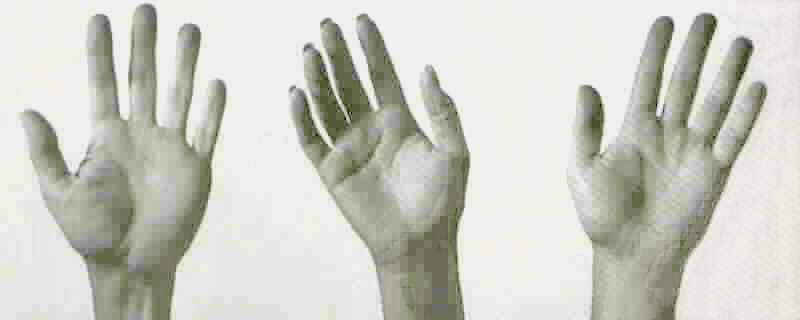 I think most natural
gut feelings or physiological reactions to acceleration are directly reading at
least the 3rd, 4th or higher derivatives, ones that our conscious minds have
real difficulty picking out. So the idea here is that you'll
be able to help inform your conscious mind about what these things mean in the
world around you by becoming more consciously aware of your easy and natural
gut feelings for them. When looking at graphs, like those
below, you can use the gaps between your fingers as a kind of shutter to move
over the curve and think about the 'roller coaster' feelings stimulated by
watching the bits of the curve in the gaps between your
fingers. The following paragraphs describe some technical
aspects of each of the classic irreversible chapters in the whole individual
story of natural system events, the classic beginning middle and end
progressions. Reading these cartoons says relatively little but what
you're looking for in real individual events, and the more interesting shapes they'll
have and from which one can read a great deal more information about them than
you might guess. Here's a popup of the
diagrams for reference: if you'd like. Oh, ... I almost forgot
the trick. The trick is to read *through* the curves of real events
to understand the real behavioral loops of the natural process behind
them. Looking *at* the curves of events will show you little or
nothing at all until you are asking specialized questions about mathematical
and statistical properties of the data points. To learn to read
change in the world, you look through the changing shapes of its curves
and interior connectedness of the evolving networks they represent the
continuous behavior of (1).
I think most natural
gut feelings or physiological reactions to acceleration are directly reading at
least the 3rd, 4th or higher derivatives, ones that our conscious minds have
real difficulty picking out. So the idea here is that you'll
be able to help inform your conscious mind about what these things mean in the
world around you by becoming more consciously aware of your easy and natural
gut feelings for them. When looking at graphs, like those
below, you can use the gaps between your fingers as a kind of shutter to move
over the curve and think about the 'roller coaster' feelings stimulated by
watching the bits of the curve in the gaps between your
fingers. The following paragraphs describe some technical
aspects of each of the classic irreversible chapters in the whole individual
story of natural system events, the classic beginning middle and end
progressions. Reading these cartoons says relatively little but what
you're looking for in real individual events, and the more interesting shapes they'll
have and from which one can read a great deal more information about them than
you might guess. Here's a popup of the
diagrams for reference: if you'd like. Oh, ... I almost forgot
the trick. The trick is to read *through* the curves of real events
to understand the real behavioral loops of the natural process behind
them. Looking *at* the curves of events will show you little or
nothing at all until you are asking specialized questions about mathematical
and statistical properties of the data points. To learn to read
change in the world, you look through the changing shapes of its curves
and interior connectedness of the evolving networks they represent the
continuous behavior of (1).
"Chapters" of a whole event (Full version)
1.Building up (i, 2. Building down, 3. Maintaining, 4. Breaking up, 5. Breaking down
Chapter I.  |
|


 by +, +, +, +,...etc.
 Building Up - Interior
networks elaborate,
Building Up - Interior
networks elaborate,
Uniform distribution of connectedness
Expansion free of limits
Increasing Faster
and Faster - Speed, 1st and higher
accelerations, positive
Growth or Emergence
- persistent positive feedback, what's behind it is:
Irreversible process of elaborating a
starting interior design, expanding explosively without any hint of its limits.
Chapter II.  |
|


 by +, -, -, -, -,... etc.
 Building Down -
Interior networks
refine (or destabilize)
Building Down -
Interior networks
refine (or destabilize)
Inverse sq. distribution of connectedness
Expansion responding to limits
Increasing Slower and Slower
- Speed positive, 1st and higher accelerations negative
Climax or Stabilization
or Integration or Becoming - persistent negative feedback,
what's behind it is:
An irreversible process of refining,
stabilizing and adapting to fit surrounding networks, (or alternately,
destabilizing in turbulence). The end of growth and the beginning of
climax for living things generally occur at their time of birth, when a seed
ends its first sprout, what would normally be considered the beginning of their
lives.
Chapter III. 


 by +, -, +, -, +,... etc,
& opposite
by +, -, +, -, +,... etc,
& opposite
 Maintaining - Adaptation, maintenance, 'homeostasis'
Connections into other networks expand
Integrating with environments
Stable and Fluctuating - Speed, 1st and higher
accelerations alternating signs
Homeostasis or Stability or Maturity - alternating positive and
negative feedback, what's behind it is:
Sustainable relationships in which
divergences tend to be corrected, cybernetic control, self
correction
Chapter IV. 


 |
| by -, +, +, +, +,... etc.
 Breaking up - Network disintegrates
Unknown statistical features...
Internal & external connections break
Decreasing Faster and Faster
- Speed negative, 1st and higher accelerations positive
Faltering or Collapse or Failure - persistent positive feedback,
what's behind it is:
The increasingly rapid disintegration of
the system of self-correcting systems.
Chapter V. 


 |
| by -, -, -, -, -, ... etc.
 Breaking down - Network decays
Unknown statistical features
By-products retain some
evolved links, 'compost'
Decreasing Slower and Slower
- Speed, 1st and higher accelerations negative
Fading or Decay-
persistent negative feedback, what's behind it is:
The lingering of separately sustainable
parts, having lost the overall organizing principle of the whole
f) Why they've been mostly invisible to us
natural systems....the forms under the sheets
(o)
 It used to be that
science thought nature followed formulas, and now it seems we're making
progress in understanding the actual physical processes. Broad
classes of events can be usefully represented with statistical models, but on
examination, individual events all occur by individual evolutionary
processes. The discussion of how they work is called either
'systems theory', 'complexity', or just 'physical process'. They seem to
be what animate all events and their dominant characteristic is of many layers
of fairly disorganized organization, thus the term 'complexity'. I
refer to the reliable principles that can be deduced, and the rigorous
methodologies for exploring and displaying them as the 'physics of
happening'. The big jump is to understand that any representation
of events are going to be lacking, and that any valid way to describe them has
to include referring to the things themselves directly. That uses
an approximate explanation to help direct attention away from explanations,
toward the real things we're trying to explain. For the sciences
that switch is very new and uncomfortable. This short
conversational discussion is both a 'notepad' itself, and design for how anyone
can construct their own 'notepad' for recording complex system observations,
thinking first about it as a 'mental notepad'.
It used to be that
science thought nature followed formulas, and now it seems we're making
progress in understanding the actual physical processes. Broad
classes of events can be usefully represented with statistical models, but on
examination, individual events all occur by individual evolutionary
processes. The discussion of how they work is called either
'systems theory', 'complexity', or just 'physical process'. They seem to
be what animate all events and their dominant characteristic is of many layers
of fairly disorganized organization, thus the term 'complexity'. I
refer to the reliable principles that can be deduced, and the rigorous
methodologies for exploring and displaying them as the 'physics of
happening'. The big jump is to understand that any representation
of events are going to be lacking, and that any valid way to describe them has
to include referring to the things themselves directly. That uses
an approximate explanation to help direct attention away from explanations,
toward the real things we're trying to explain. For the sciences
that switch is very new and uncomfortable. This short
conversational discussion is both a 'notepad' itself, and design for how anyone
can construct their own 'notepad' for recording complex system observations,
thinking first about it as a 'mental notepad'.
The type of physical event of most interest here is things that begin and end and have some period of stability in-between. That's a highly selective filter that helps identify physical things that exist as individuals and develop and animate original networks of relationships. There are also lots of other kinds of physical processes that don't exist as individuals. Frequently they're just echoes of other distant or past events, most simply categorized as 'pressure flows' or 'waves', that fit the 'chain of events' model of causation. Lots of these are what science has been most successful in describing with formulas. That's not the subject here though. Complex natural systems are neither 'top-down' nor 'bottom up' kinds of organization but have organizational development and resilience 'through and through', and how extremely common they are in ordinary events.
What makes complex self-organizing events possible to find, and provides links to exploring how they work, is that they all follow the same evolutionary sequence of changes over time ¸¸¸¸.·´ ¯ `·.¸¸¸¸. This 'defines' what a system is by pointing to them, not as a set of connections to other words. One of the things that makes them difficult to discuss, requiring some groping around, is that natural systems are sort of a new discovery that's complicated and unfamiliar. Our language just doesn’t have shared words for many parts of it. Building new words for things that have always been around, but we never really thought about before, is a big part of the task. What you'll find is that we live in a world chock full of complex systems, and because many of them have been around for as long as our cultures have, a lot of our traditional thinking, issues, story lines, jokes, values, etc. reflect a sound awareness of natural complex systems, as indigenous knowledge. In many cases our natural language displays a very sophisticated but unintentional 'complex systems thinking'. Natural language (as opposed to formal definitions) will be found highly useful as you begin to put things into place. There are many ways to enter the subject, but the most available, rigorous and reliable is that complex systems come from growth, and that growth, curiously, is an exceedingly intricate process of accumulating organizational development without any apparent cause. It develops on its own, every instance as a separate and independent event!
 The 'mistake' science has been making is
describing all-natural behavior as following 'rules'. People follow and
find rules useful, not nature which entirely uses complex physical
processes. Taking the 'rule idea' too far efficiently hides from view all
the things of nature that are continually changing their rules and definable
only by pointing. That turns out to be most things that directly
matter to people, and why for most people it seems that science is
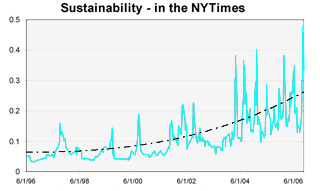
irrelevant. Recognizing that any 'bump on a curve' (1)
generally identifies and links observation to evolutionary systems in
operation, provides a method of pointing to the individual animating parts of
our world that matter. The first example is a trace of the word use
of 'sustainability' in the NY Times over the past 10 years. In this
record you see something beginning, and you can see the complexity of what's
going on inside. That's where you start. Of course, you have
to watch out that one 'bump on a curve' doesn't really represent an overlay of
many unrelated things, or maybe just a fluctuation in a process with no
evidence of beginning or end and follow other basic rules of observation.
It's very hard to see the beginning and end of a ripple in a pond, for
example. Science has used ripples as a teaching example of natural
systems in steady state. What systems thinking is more helpful for are
the things traditional science has had trouble with, things that are changing
and not in steady state, and the things science has been most successful with
tend to be the hardest to use for studying evolving processes.
Yes, these cautions do rule out considering a great many kinds of
'bumps on a curve', but just from your beginning learning process, not from the
whole picture.
The 'mistake' science has been making is
describing all-natural behavior as following 'rules'. People follow and
find rules useful, not nature which entirely uses complex physical
processes. Taking the 'rule idea' too far efficiently hides from view all
the things of nature that are continually changing their rules and definable
only by pointing. That turns out to be most things that directly
matter to people, and why for most people it seems that science is
irrelevant. Recognizing that any 'bump on a curve' (1)
generally identifies and links observation to evolutionary systems in
operation, provides a method of pointing to the individual animating parts of
our world that matter. The first example is a trace of the word use
of 'sustainability' in the NY Times over the past 10 years. In this
record you see something beginning, and you can see the complexity of what's
going on inside. That's where you start. Of course, you have
to watch out that one 'bump on a curve' doesn't really represent an overlay of
many unrelated things, or maybe just a fluctuation in a process with no
evidence of beginning or end and follow other basic rules of observation.
It's very hard to see the beginning and end of a ripple in a pond, for
example. Science has used ripples as a teaching example of natural
systems in steady state. What systems thinking is more helpful for are
the things traditional science has had trouble with, things that are changing
and not in steady state, and the things science has been most successful with
tend to be the hardest to use for studying evolving processes.
Yes, these cautions do rule out considering a great many kinds of
'bumps on a curve', but just from your beginning learning process, not from the
whole picture.
Start with singular events in something you're immersed in, know well and care about: the steps of beginning and ending a community activity or plan, preparations that swell climax and fade away like for the 'big game' at your school, or your family or community celebration of the holidays, a fad at the office or among your gang of friends, the experience of finding new loves either a lover or a life's work, the sadness and personal growth of break-ups and disappointments. These all follow nature's design process, starting from some seed, then developing wider involvements with of things that might typically stabilize to then refine a new domain of relationships which has a long duration of stability before coming apart in some way, before dyeing down and fading away. To follow them you try to define some consistent quality or measure and trace how that quality or measure changes, noting when the trend displays flowing shapes in time and when those shapes change direction.
The magic of the holidays is maybe the best sort of thing to watch. We know it's going to happen, but we just can't make it happen without going through the whole process, and it always seems to involve the inclusion of strangers and unexpected absences, the whole range of life's issues in a sprawling design process involving many players where you know what's going to happen, and that it'll come to a head, but is hard to feel for real until it does. The curves of excitement or expectation you sketch do not describe what is producing those measures. What they do is help point to what is doing out in the world, and to when and how those connections branch out and return through a network. What you tend to find are patterns of broken connections that are more 'discovered' than 'compelled', an opportunistic world of distributed and 'decentralized' physical events involving wide varieties of informal hierarchies of unnamed and unnamable things. It helps expose a common mystery, providing some keys for making a puzzle of the parts you care to explore. Then having developed basic skills you can read the growth and climax of other things. You might not expect to learn about the great events of history, say the 600-year exploding growth of modern man, or the mysterious appearance of terrorism, from watching small scale growth and evolution events in personal experience, but they're they all have major similar in their fundamental evolutionary processes.

In the NY Times yesterday (3/3/07) Krugman mentioned that: "The truth is that efforts to pin the stock decline on any particular piece of news are a waste of time". Of course, he's referring to the huge amount of time professionals have been spending doing just that! This seems to me to be another of the good ways to begin to notice where natural systems are involved in our lives, when you notice people offering complete nonsense to explain what's happening, but it largely remains uncontested. Take politics for example... Oh well, I'll resist the temptation to rant, but really, when people claim all sorts of ridiculous theories of cause and effect that no one else seems able to contest, it's a sign of something bigger going on that all are at a loss to comprehend, and where someone may be abusing the opportunity to deceive us. If you switch from asking whether you agree or not, to a learning mode of thinking, improbable explanations offer a good sign of where progressing loops of natural systems may be active, and a good reason to widen the scope of your questioning.
The formal approach starts with learning to recognize growth and decay curves in some measures of events. Why growth and decay? Because that's what things begin and end with. What it tells you, say the growth of the insurgency in Iraq, or unexpected progressive change in one's own personal relationships, or in the physical properties of the material you're working on your work bench, is that there's something happening 'on its own'. That autonomous 'happening' is invariably a self-connecting loop of relationships that is multiplying, essentially a living thing with an interior world of its own. I remember watching the multiplication of the Iraqi insurgency and feeling very helpless in being unable to point out what was happening, in the face of the incomprehensible theories of causation that were being bandied about and supported almost entirely by misplaced fear. The insurgency was the tiniest thing at first, evidenced by independent local 'defenders' irrationally walking out in the open and taking pot shots at the huge columns of the US army streaming bye. Our soldiers shot them down and laughed, but these insignificant irritations slowly but methodically multiplied. That pattern tagged it as a cultural event, misguided if you like, but of a widely distributed organic self-defense response to an alien presence. That the insurgency grew to the point where it was then taken over by various gangs of manipulators with nefarious intent hides the fact that those gangs didn't produce the groundswell of rejection in the first place, we did. To me, the initial evidence of growth in the insurgency was the sign we should immediately surrender, ask to speak to their leaders, and tell these indigenous defenders that they were the very people we came to liberate... but no, we carried through with trying to impose our own organization plan on a different kind of society, treating anyone who objected as the enemy. Now the killing in defense of sacred honor on all sides is in an endless rut and an almost unsurpassable example of a complex systems disaster of huge proportions. There are others brewing too.

The specific method for first identifying where complex systems are located and then how they work starts with learning when you can treat a series of dots as a curve [¸¸¸¸.·´ ¯ `·.¸¸¸¸], and then where that curve changes direction. In the first phase of complex system evolution there is explosive growth, and the issues relate more to elaborating the original 'idea' and 'connection' that the expanding new loop of relationships represents. In the second phase the progression of change reverses, turning its responses and 'attention' to the future, making successively smaller steps toward completing its form and fitting in with it's world. The tough insight to develop is that the switch from start-up elaboration to stabilization and refinement can be either internal or external to the system, either the system's own internal 'choice' or an imposition. Our traditional language is really not quite equipped to deal with this, the idea that anything in the world but humans make choices, but the evidence is there when you begin to look. You can say it's because of evolution rejecting all other forms of life, perhaps, but all living things turn off their own explosive growth from the inside, long before they exhaust their resources or their multiplying burdens induce the collapse of their own structures or environments. Seeds stop exponential growth when they have their first two leaves, an embryo gives up its explosive development at or near birth. All living things switch off their exponential growth at the beginning of their lives. Living things don't stop growing because their skin gets too tight and their organs strangle. That's the kind of thing you'd see if growth was always limited by pressing its physical limits, always 'maximized'. Living things don't maximize their growth relative to their external limits. They're 'smarter' than that. The fact is, growth is maximized in living systems to a comfortable degree of freedom from external limits, giving them resilience, independence and stability. What signals living growth systems to climax when they still have freedom to develop is another question, but how we'll find them is by tracing the links from the places and moments in time where we see it happening, the inflection points in their growth. The inflection points, like the origins and ends of growth, are times when nothing at all seems to be changing, except the entire way the system is changing. The major causes of change in complex systems are always quite invisible.

The best way to begin thinking about what sort of thing the autonomous choices of complex systems might be is to reflect on the spontaneous choices of the same type that we make every day. In lots of ways, we work to get things to build and multiply, then pick a time called 'enough' to switch and get them to stabilize and refine. Then we support them until it's time to let them fall apart again, scattering their parts into the same kind of mysterious soil from which they first came. Systems design is just farming, with a little extra creativity. The key observation, though, is 'enough'. It's a recognition that successful growth itself is a multiplication of instabilities and inherently requires that those instabilities be brought back into balance or to go out of control. Nature's secret of creativity is also dangerous.
A struggle to get things going and then picking a point called 'enough' certainly describes both my easy and difficult struggles to get out of bed every morning. It's that kick-start routine, most often beginning with a denial of wakefulness and then staggering around till I've had a cup of coffee and, after a moment's pause, am ready to engage with the world again, having aimed at the level of intensity needed for the day I envision ahead. Another everyday example is in throwing a party. Once people have arrived, some time is spent pumping it up to make it fun, with say, a little provocative behavior and alcohol. The purpose is creating an elevated sustainable state of enjoyment. It's not for multiplying the excitement of risky behavior to the point of humiliating or injuring people, destroying the fun and the reputations of everyone involved. Those are different choice points on the exact same path, separated by the marker called 'enough'. People who can't have fun without ever more dangerous approaches to the edge of doing harm, usually regret it. In a family business the power to multiply profits by growing the business is usually taken to the point of comfortably serving their original market, letting them turn back to their original purposes, living a good life, helping their kids get started and paying for their retirement. In all these common daily transformations there are recognizable creative flows and turning points at which there are changes in kind.

So, when you see multiplying trends it's a sign of multiplying things, developing on their own, creatively out of control. Forget all the hooey that draws on your fear that someone else is magically powerful and 'controlling' events. The eventfulness of nature comes from 'living' natural conspiracies. They're mostly dangerous when we ignore them. Connecting the dots, yourself, is the critical step. Though, as I said above, we know a lot more about this subject than we first think, it takes some baby steps first. The first two steps, to then be repeated over and over as you slowly expand your technique, is first recognizing series of dots that represent flowing shapes of change and then looking for the progressing loops of relationships that connect them. Most things, say the approach of change in your personal or business life, are wonderfully productive to understand on a deeper level, but don't push to conclusions. First, be satisfied by expanding their mystery. Noticing that a series of dots is a flow with signs of multiplying progression, perhaps bending toward a crisis of change, means envisioning a complex systems as a curve [¸¸¸.·´¯ `·.¸¸¸] , and thinking about it's progressive physical loops connecting the dots perpendicular to the page. That mental map of flows in time and loops in space is itself a notepad in that it gives you a map of future discoveries and a way to organize their relationships.
1) First Attempt: Think of some personal experience, event or project you'd like to delve into deeply and discover something new about. It could be a project like your childhood tree house, or your lifetime is sports, or just the amazing dinner you made last Thursday, really anything that took a process and attracts your interest. The series of leading events that mark where and how the process 'takes off' is what you're first looking for. That marks when the event takes on some life of its own, defined it's own interior and exterior, and becomes an autonomous system. Then you look for what the 'seed' of that growth process was, the original loop from which the growing loops developed. All self-organizing events start with small seeds. When you really look for them though they become untraceably small, so all you can ultimately do is point at a small window of opportunity during which they happened. Do your best to identify the earliest beginnings of what happened and trace how the effects of events fan out and then contract again. You'll always find successive expanding and then contracting webs of events that become involved. Then the connections culminate and eventually begin to detach and then fade away. In addition to the rise and fall of events, watch their designs evolve from producing ever bigger then ever smaller results, from expanding elaboration to refinement in every distributed part.
2) At the Office: Here you have ready data to help identify the natural phases of development. Take the person hours, phone log, billings and a list of milestones, starting your graph before it's beginning and going to it's completely done and archived. On the timeline make up names for some time periods and the events that divide them and the events that mark their climax. Add to the timeline the hiring or association with consultants, signing contracts, various milestones. Collect easily retrieved photos and clippings. Every bit of information should be organized in sequence, and then given reference fields for the connections and events it's part of. As a fine point, give every event two dates, both its start and end. To do that rigorously you need to pick a mathematical point on a flowing curve, either a peak or a turning point in the activity level of the event or its rates of change. Write a story about how the webs of activity fan out and contract and the manner in how small events lead to bigger ones at first and big acts to smaller ones in the end. There should be some kind of software to assist in this, but I'm just finding out about how the tools are used in the field of Qualitative Research.
1) Development Impacts Design a system for reducing the impacts on the earth of economic development that does not consequently serve more to multiply impacts, using any method. Then design one that requires only providing people better information on the effect of their choices.
2) Creative Bureaucracy Design incentives and opportunities for government workers that attracts ambitious and service oriented people and rewards them and their work with recognition and the ability to have an impact.
3) Reducing Poverty Design a way of helping the poor that does not end up multiplying the poor and their suffering.
JLH